Matt Cheung

I’m a PhD candidate in Electrical and Computer Engineering at Rice University, working on machine learning, LLM reasoning, and computer vision.
My research focuses on developing and evaluating AI models, with particular interests in foundation-model reasoning, uncertainty quantification, generative modeling, and reliable decision-making. I’ve published first-author research at ICLR, EMNLP (Outstanding Paper), and MICCAI, and have industry research experience developing medical AI at Johnson & Johnson and software development experience developing manufacturing software at Enovix Corporation (pre-IPO).
Seeking full-time job
📢 I’m graduating in December 2026 and seeking full-time Research Scientist, Applied Scientist, and Research Engineer opportunities. Please reach out to me if interested (matthewyccheung at gmail dot com)!
What I Can Build and Deliver
I develop practical ML solutions that help improve product performance, automate complex workflows, reduce costly failures, and accelerate R&D. Examples from my research and industry experience include:
-
Improve LLM reasoning and reduce failures: Developed CROP (EMNLP 2026, Outstanding Paper 🏆), a method for identifying trustworthy reasoning steps and detecting where model reasoning becomes unreliable-relevant to improving AI assistants and agents.
-
Automate image analysis: Worked at Johnson & Johnson R&D to develop and deploy automated detection of geographic atrophy biomarkers from 3D optical coherence tomography scans GAIZ (MLMI MICCAI Oral 🗣️) and fundus autofluorescence images, with potential to reduce manual analysis and support scalable imaging workflows.
-
Make computer vision models more dependable: Developed COMPASS (ICLR 2026) to quantify segmentation quality and reliability under distribution shifts, helping identify predictions that may require additional review. Developed ConVOLT (MICCAI 2026, Spotlight 💡), ConRad and Bias-CP (ISBI Oral 🗣️), enabling computationally efficient uncertainty quantification for volumetric, radiomic and radiotherapy planning measurements in medical-image segmentation.
-
Evaluate generative models and uncover hidden failures: Studied diffusion-based CT reconstruction under sparse measurements, identifying when generated images recover useful information and when plausible-looking outputs may be misleading – Diffusion Priors (ISBI).
-
Develop reproducible ML research tools: Released Python implementations and experimental pipelines for published ML methods, supporting testing, benchmarking, and further model development.
news
| Oct 27, 2026 | Our paper Conformal Certification of Reasoning Trace Prefixes was presented as an oral and won outstanding paper at EMNLP 2026 Main Conference! |
|---|---|
| Aug 10, 2026 | Our work at Johnson & Johnson R&D “GAIZ: Automated Detection of Geographic Atrophy Biomarkers via Volumetric OCT using Novel Morphological Objectives” was accepted at the 2026 MLMI Workshop at MICCAI as an Oral. |
| Jun 12, 2026 | Our paper Efficient Conformal Volumetry for Template-Based Segmentation was accepted at MICCAI 2026 as a Spotlight. |
| May 11, 2026 | I am working at Johnson & Johnson R&D this summer as a AI/ML Computer Vision intern. |
| Jan 26, 2026 | Our paper COMPASS: Robust Feature Conformal Prediction for Medical Segmentation Metrics was accepted at ICLR 2026. |
latest posts
| Sep 22, 2026 | Handling large images in nnU-Net Coarse to Fine |
|---|---|
| Jul 23, 2026 | Notes on Transformer Positional Encodings |
| Jul 22, 2026 | Notes on Transformer Blocks, Tensor Dimensions and Attention FLOPs |
| Jul 18, 2026 | (Running) Notes on Language Modeling from Scratch |
| Jun 18, 2026 | RL Notes: TRPO and PPO |
selected publications
-
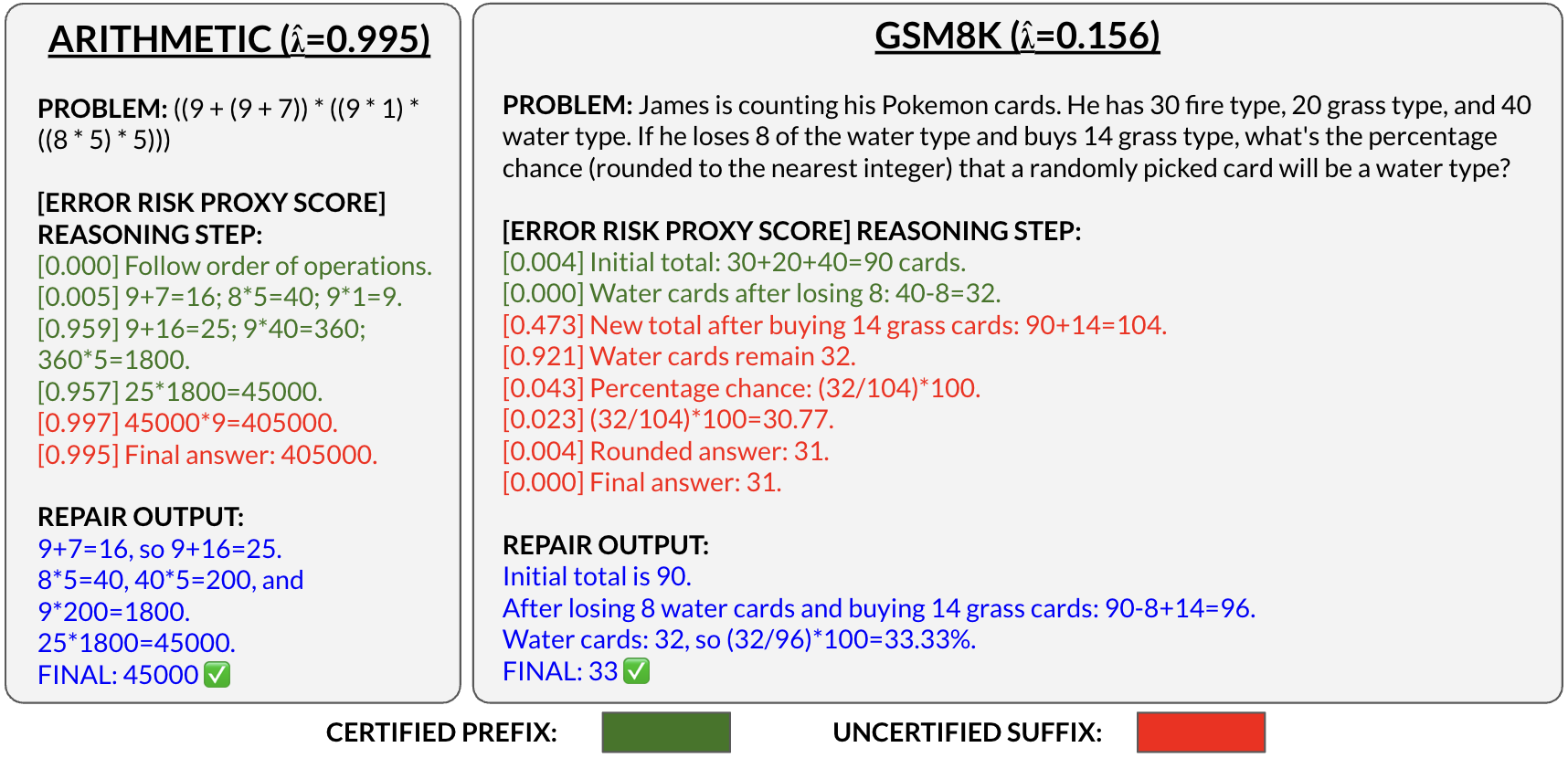 Conformal Certification of Reasoning Trace PrefixesEMNLP (Outstanding Paper 🏆), 2026
-
 COMPASS: Robust Feature Conformal Prediction for Medical Segmentation MetricsICLR, 2026
-
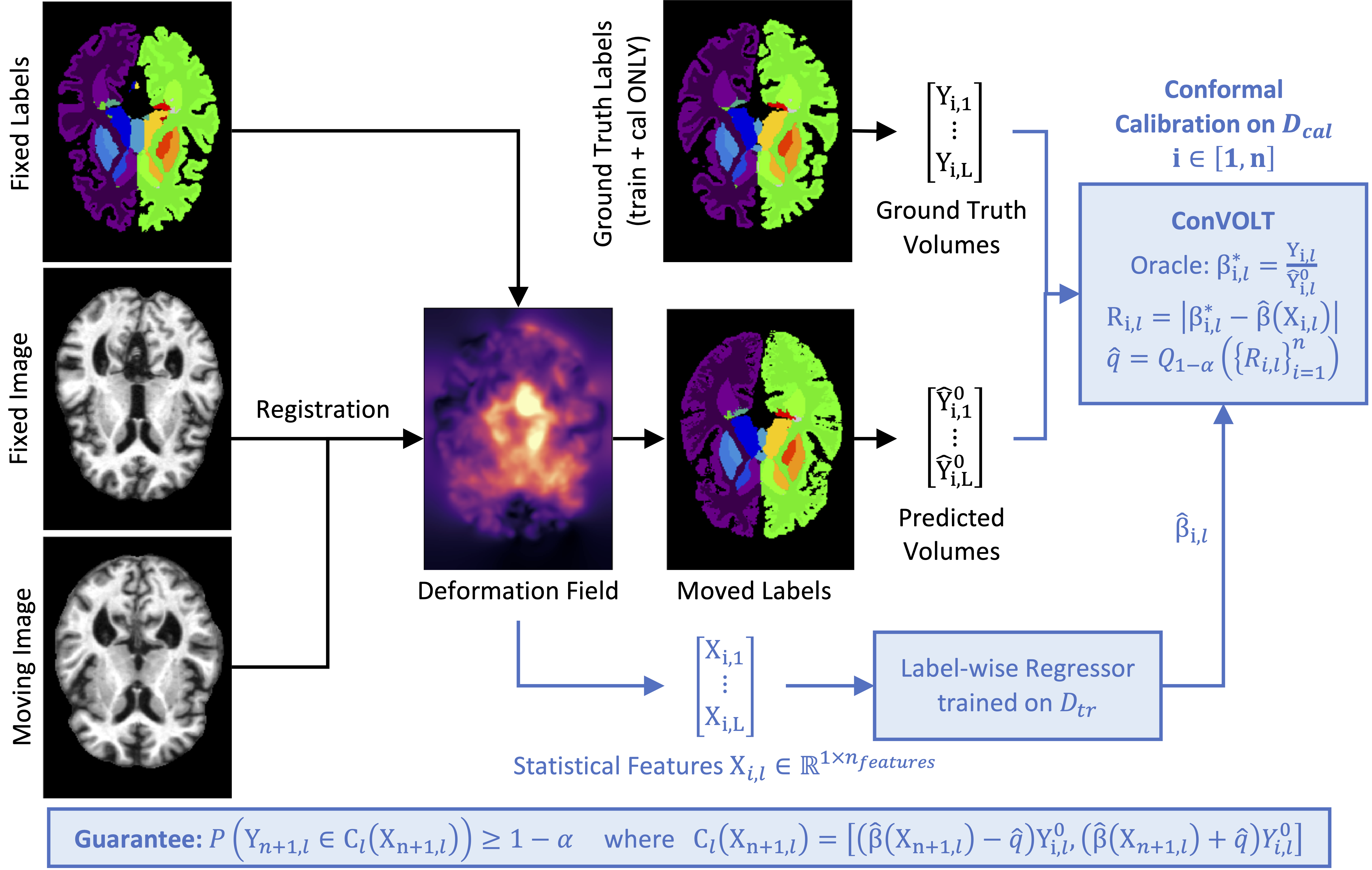 Efficient Conformal Volumetry for Template-Based SegmentationMICCAI (Spotlight 💡), 2026
-
 Wearable blood pressure monitoring devices: Understanding heterogeneity in design and evaluationIEEE Transactions on Biomedical Engineering, 2024